Practical perspectives on security, compliance and AI governance for UK small and mid-sized businesses. Written for the people who have to make the decision, not the people who sell the tooling.
Cyber Essentials, incident response, testing and the questions your customers are starting to ask.
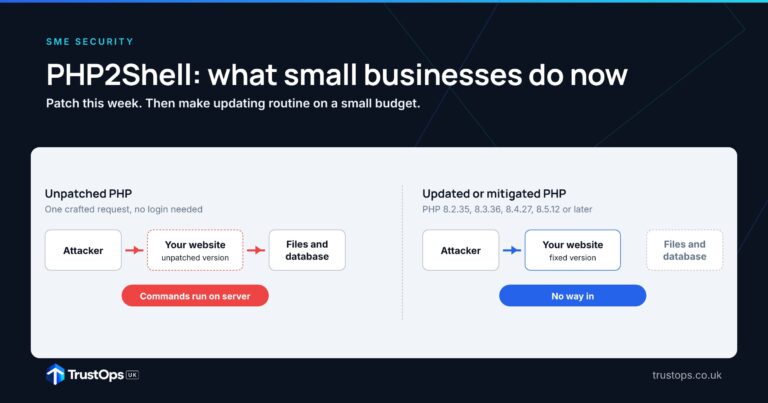
Two critical PHP flaws were fixed on 21 October 2026. What a small business without a security team should do this week, and how to stay…
Read the article →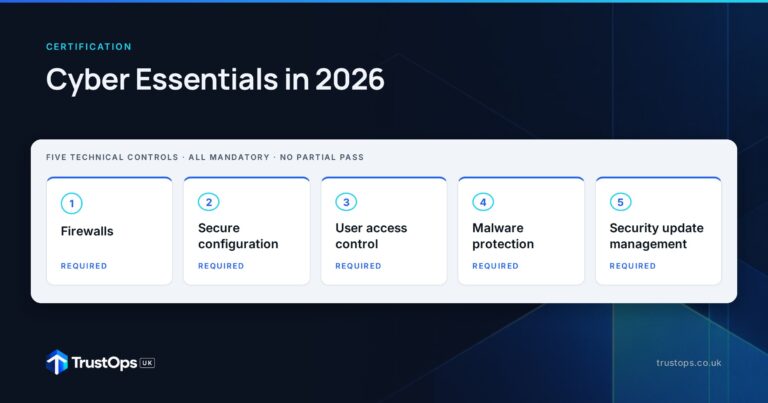
A plain-English guide to Cyber Essentials in 2026 for UK SMEs: what the five controls mean, the April 2026 changes, where firms fail, and the realistic…
Read the article →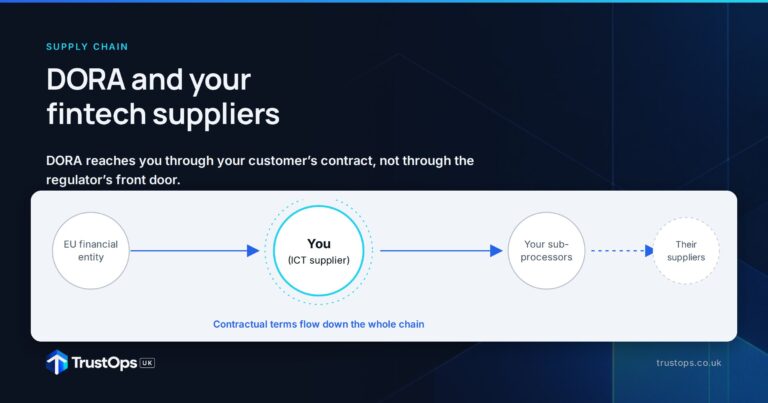
What DORA means for UK SMEs supplying EU financial firms: the January 2025 start date, ICT third-party rules, and practical steps to stay contract-ready.
Read the article →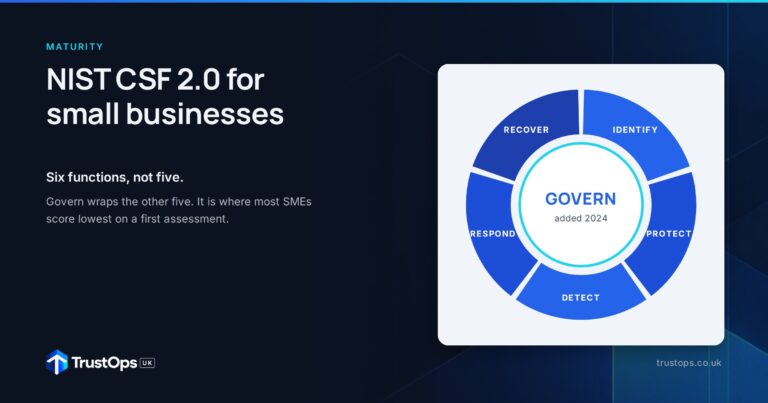
A plain-English guide to NIST CSF 2.0 for UK SMEs: the six functions, why Govern was added in 2024, and how it maps to a practical…
Read the article →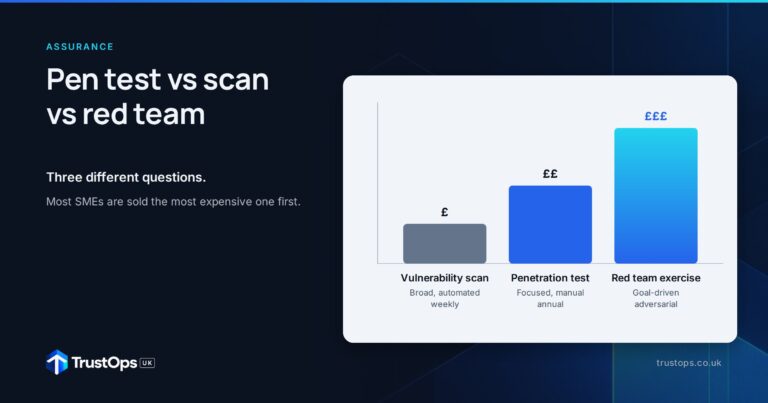
A plain-English guide for UK SMEs: what pen tests, vulnerability scans and red teaming actually are, what they cost, and which one you actually need.
Read the article →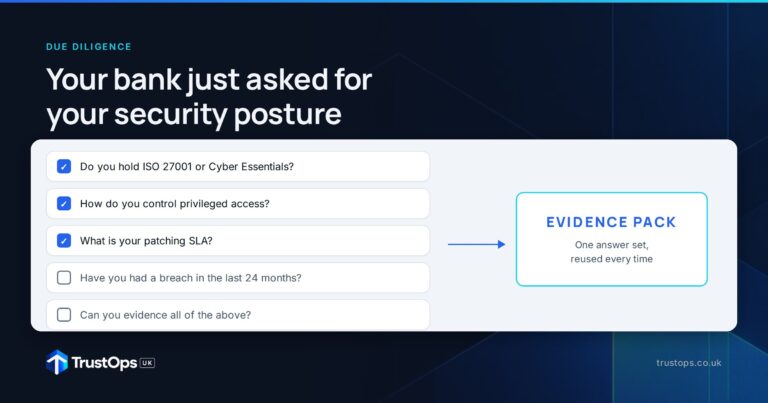
Why banks and enterprise customers send SMEs security questionnaires, what they are really checking, and how to answer credibly and fast.
Read the article →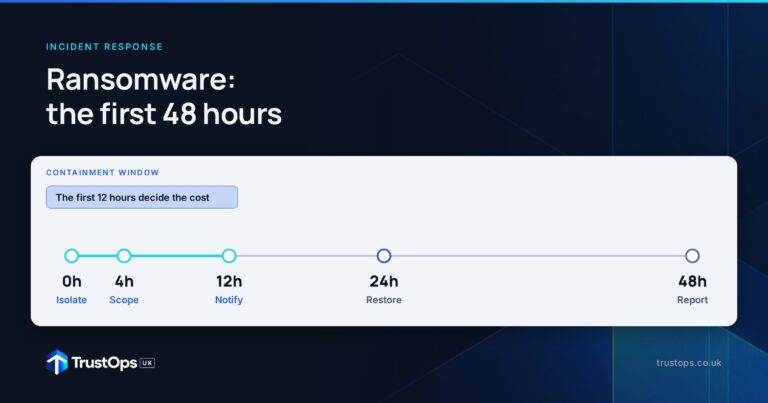
A calm, practical hour-by-hour guide to the first 48 hours of a ransomware attack: what to do, what not to do, who to call and when.
Read the article →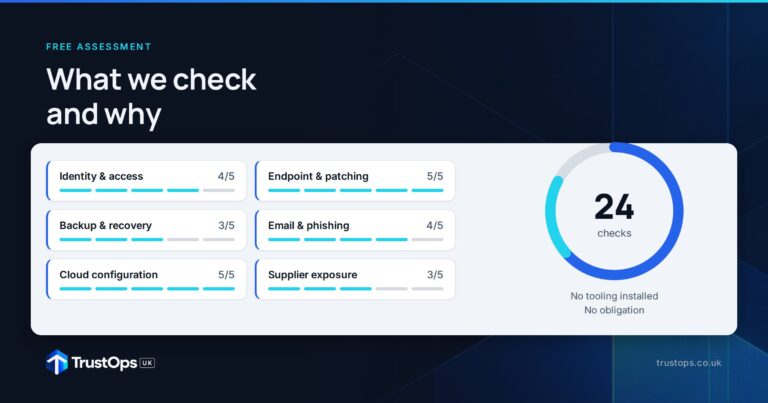
A transparent walkthrough of our free 15-minute security assessment: the six areas we check, how scoring works, and what you get. No catch.
Read the article →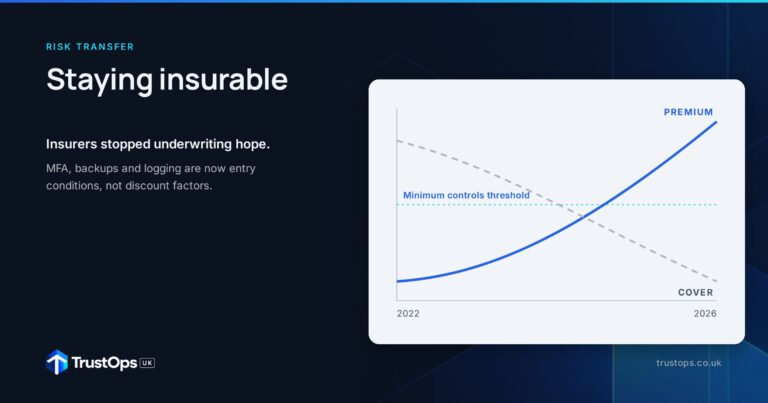
Why cyber insurance underwriting tightened, the controls insurers now demand, how a failed control can void a claim, and how to prepare for renewal.
Read the article →Board-level risk, monitoring and getting senior security capability without a senior security salary.
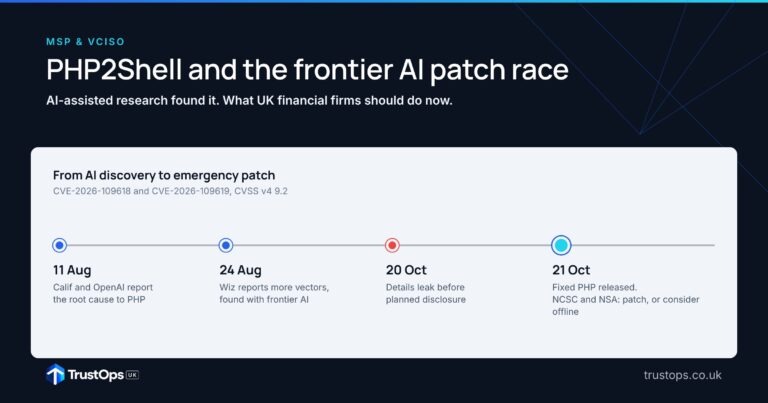
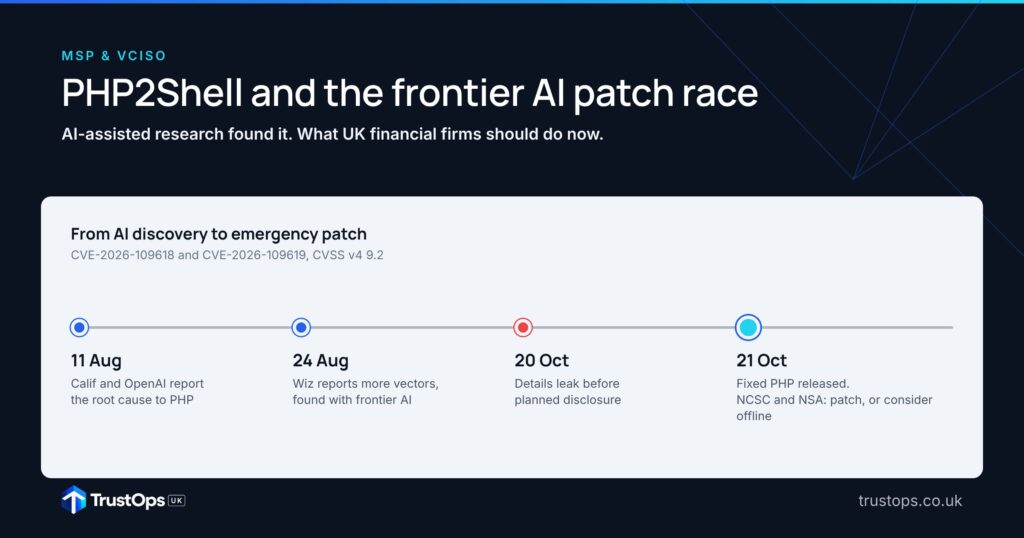
Two critical PHP flaws, found with help from frontier AI, led governments and large websites to switch services off. What happened, who was affected, what the…
Read the article →
How boards should judge and fund security programmes as AI adoption and regulation accelerate, with the UK obligations that now set the timetable.
Read the article →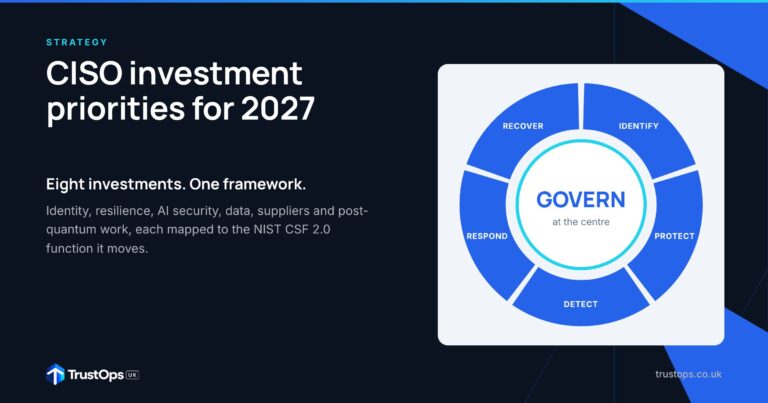
Eight places to put security budget in 2027 and how each one moves your NIST CSF 2.0 profile, with the UK evidence behind them: AI-driven threat,…
Read the article →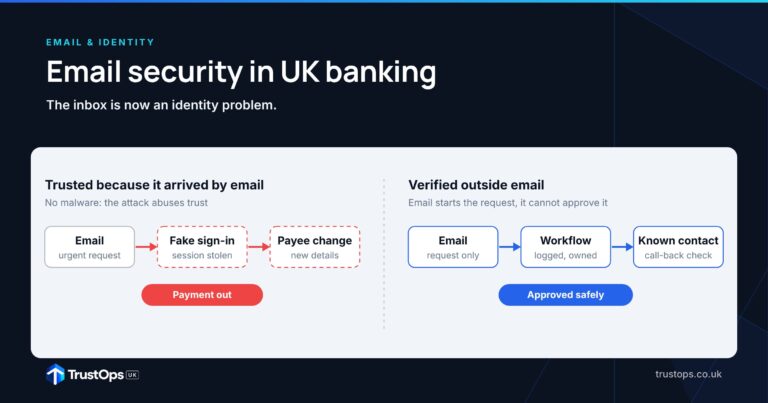
Phishing is still the most common attack UK firms report. What that means for banks and building societies: domain protection, identity controls, mailbox monitoring and payment…
Read the article →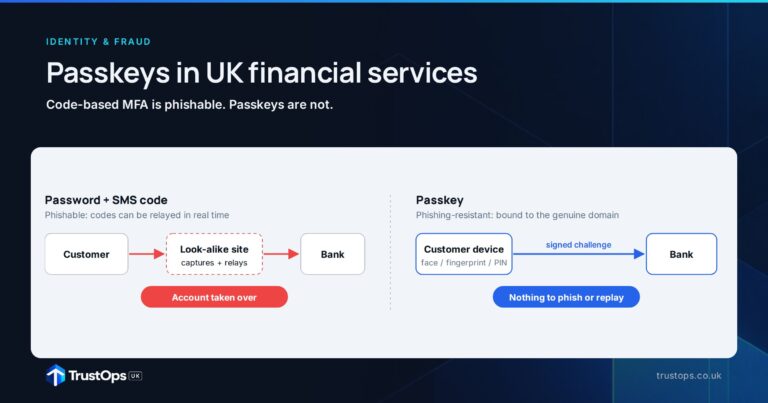
The NCSC now says passkeys should be the default login. What that means for UK banks, building societies and fintechs: fraud exposure, regulation and a practical…
Read the article →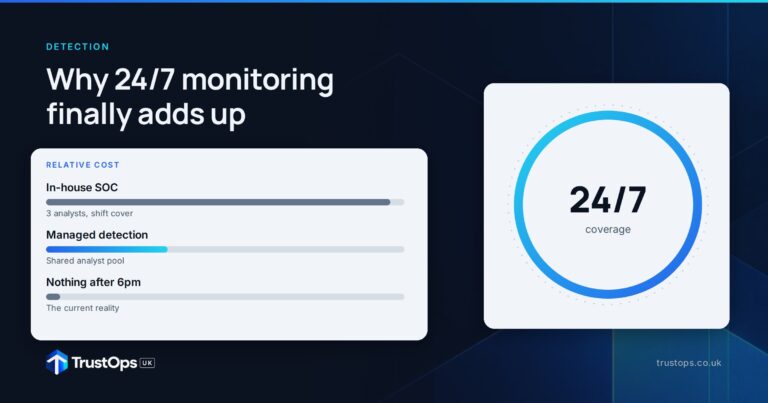
A plain-English guide to SIEM, SOC and managed detection for UK SMEs: why monitoring used to be enterprise-only, and what changed the economics.
Read the article →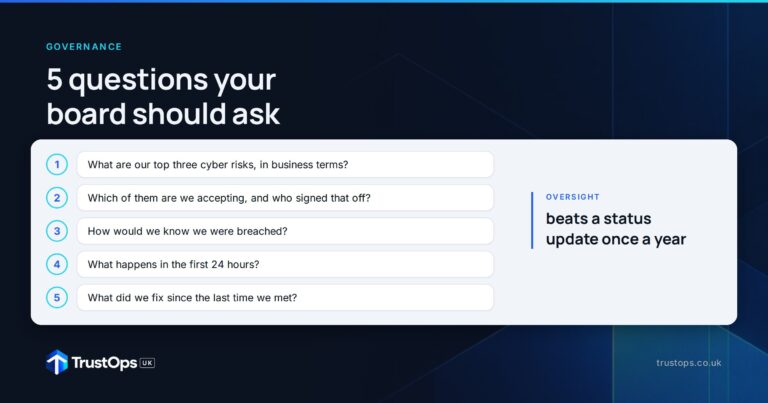
Five sharp questions a board should ask about cyber risk, what a good answer sounds like, and why oversight beats a status update once a year.
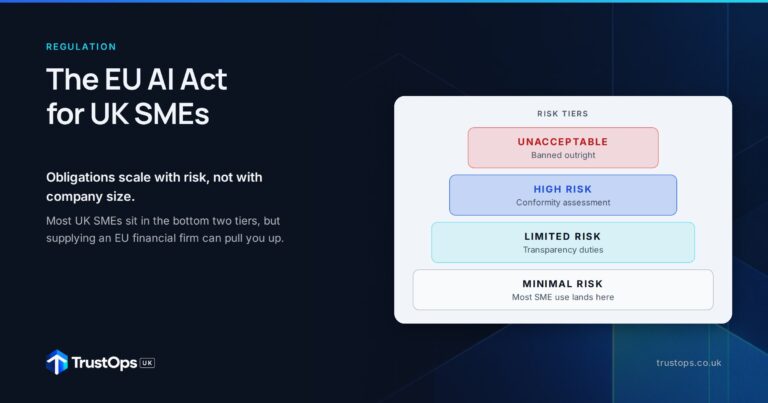
Read the article →The EU AI Act, NIST AI RMF and what actually applies to a business your size.
Start with a free 15-minute assessment. You get a score out of 100 and the three things to fix first.